
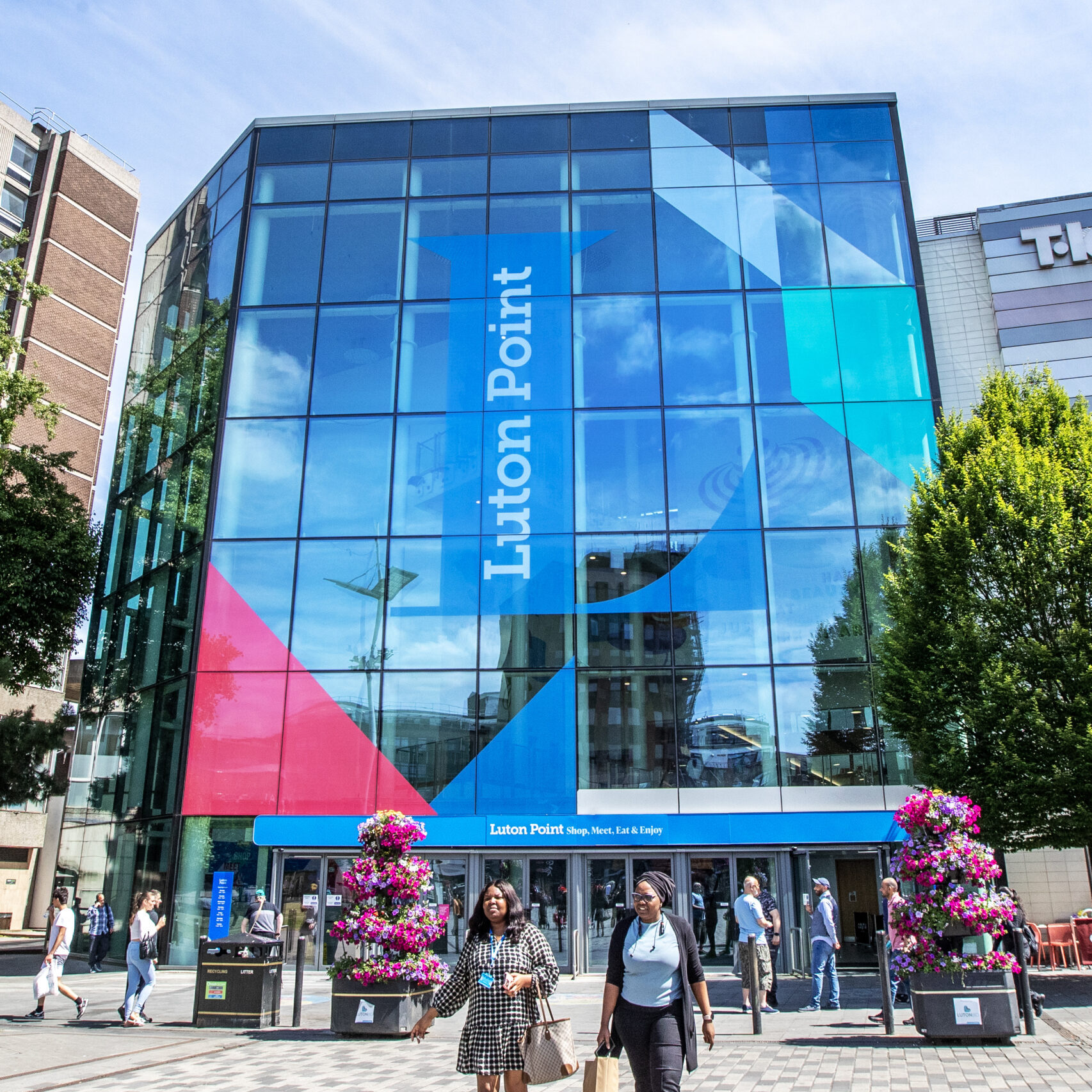


Luton is a large town, borough and unitary authority area in Bedfordshire, England. Together with its neighbouring towns of Dunstable and Houghton Regis, it forms the Luton–Dunstable urban area, with a combined population of approximately 260,000.
Luton is strategically located around 30 miles (50 km) north of London, 20 miles (30 km) east of Aylesbury, 14 miles (20 km) west of Stevenage, and 22 miles (35 km) south-east of Milton Keynes, making it one of the best-connected major towns in the Southeast.
The town is home to Luton Town Football Club, a long-established professional club whose history includes multiple spells in the top tier of English football and a historic Football League Cup victory in 1988. The club plays at Kenilworth Road, its home ground since 1905.
London Luton Airport, which opened in 1938 and served as an RAF base during the Second World War, is one of the UK’s busiest international airports. It is a major driver of employment and economic growth, with continued investment in passenger facilities, surface access, and sustainable operations.
Luton is also a key centre for education, with the University of Bedfordshire based in the town, contributing significantly to skills development, innovation and regeneration.
The Luton Carnival is widely recognised as the largest one-day carnival in Europe. Traditionally held over the Whitsun Bank Holiday weekend, it now takes place annually in early summer and remains one of the town’s most significant cultural events, celebrating Luton’s diversity and attracting visitors from across the UK.
Historically, Luton was internationally recognised for its hat-making industry, which played a defining role in the town’s growth and identity. The town later developed a strong automotive heritage, with large-scale manufacturing shaping employment and skills for much of the 20th century. While traditional manufacturing has now ended, this shift has supported Luton’s transition towards a more diverse, service-led and knowledge-based economy, underpinned by aviation, education, logistics, healthcare, retail and cultural industries. Today, this evolution is reflected in ongoing town centre regeneration, investment in infrastructure and public realm, and a growing focus on innovation, enterprise and inclusive economic growth, advanced engineering, manufacturing and cultural industries.


